Snooker vs Pool: The Real Differences
Snooker and pool share an ancestor, a green cloth and the basic idea of potting balls with a cue. Beyond that, they reward quite different skills. If you have played pool in a pub and are thinking of trying snooker, or you watch both on television and wonder why snooker looks so much harder, this guide sets out the real differences.
The table
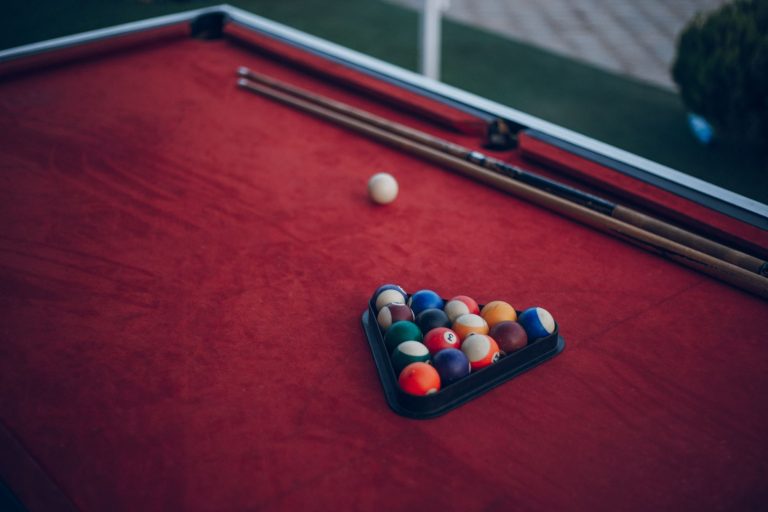
A full-size snooker table has a playing area of 11 feet 8.5 inches by 5 feet 10 inches (3,569 mm by 1,778 mm). Pool tables are much smaller: typically 7 feet in British pubs and clubs, and 7, 8 or 9 feet for American pool, with 9 feet the professional standard. On a snooker table the cue ball regularly travels several metres, which is why long potting is such a big part of the game.
The pockets
Snooker pockets are narrow and rounded, cut to templates approved by the governing body, and only slightly wider than the balls. Pool pockets, especially American ones, are wider relative to the balls. A shot that would drop in a pool pocket can easily rattle in the jaws of a snooker pocket, so snooker demands more precision on every pot.
The balls
| Snooker | English pool | American pool | |
|---|---|---|---|
| Number of object balls | 21 (15 reds, 6 colours) | 15 | 15 |
| Ball size | 52.5 mm | 2 inches (about 51 mm) typical | 2.25 inches (57 mm) |
| Scoring | Points per ball, highest score wins | First to pot own group then black | Depends on game: 8-ball, 9-ball |
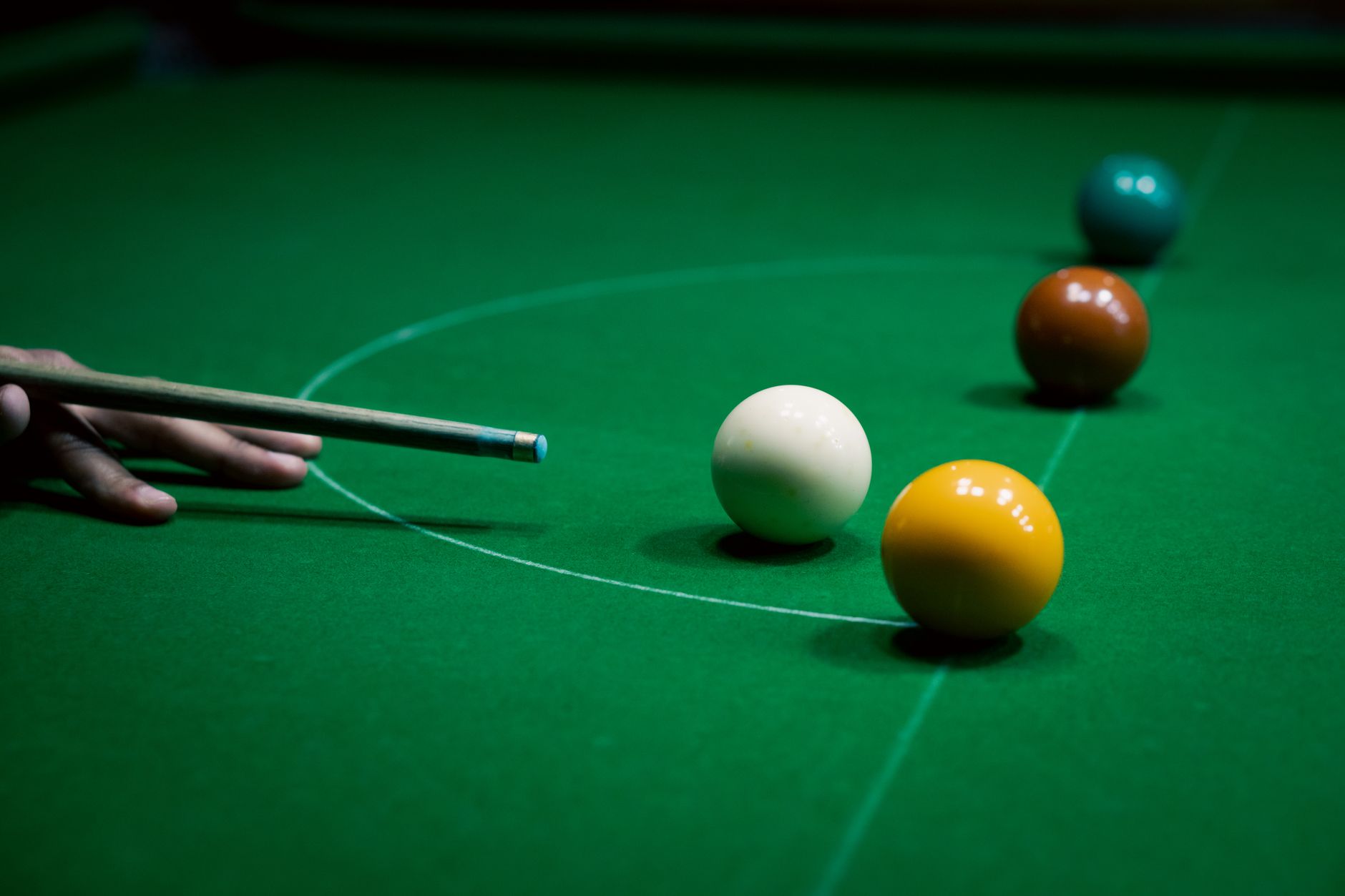
The official snooker ball diameter is 52.5 mm with a tolerance of plus or minus 0.05 mm.
The cue and tip
Snooker cues are usually made of ash or maple with a slim shaft and a tip of around 9 to 10 mm, which suits the smaller balls and precise cue ball control. English pool cues are similar in style but often have slightly smaller tips. American pool cues are shorter-ferruled, jointed maple cues with tips around 12 to 13 mm, built for the heavier balls and powerful break-offs. Using the wrong cue makes a real difference: a thick American pool tip feels clumsy on snooker balls. Bestsnookercue compares the options in its guide to choosing a cue for snooker, pool or carom, and explains the difference between ash and maple shafts.
The rules and tactics
In snooker, you score points and the higher total wins the frame. A player can stay at the table for a long break, and a frame can be won from a single visit. Safety play and snookers are central tactics, and players may need to lay snookers to recover a frame. In pool, especially 8-ball, you win by potting your group and then the black. Frames are shorter, and positional play matters within a much smaller area.
Which is harder?
Most players who have played both agree that snooker is harder to play well, mainly because of the larger table, tighter pockets and longer distances. That does not make pool easy: top-level 9-ball demands exceptional power and cue ball control. They are different skill sets rather than easier and harder versions of the same game.
Do pool skills transfer to snooker?
Partly. Aiming, sighting and basic cue ball control transfer well. What pool players usually need to work on is a straighter, longer cue action and the patience of snooker’s tactical game. Start with the fundamentals in our guide to holding the cue and then work on cueing straight.
How the rules shape the play
Positional play
In snooker, you alternate between reds and colours while reds remain, so you are constantly playing position from one area of the table to another and back. In pool, you usually choose freely among your own group, which gives more options but also rewards careful planning of which ball to take first. Both demand cue ball control, but snooker’s long distances and small pockets make every error more costly.
The break-off
The break-off shot in the two games could hardly be more different. In pool, especially 9-ball and 8-ball, the break is a powerful shot designed to spread the balls and often to pot one. In snooker, the break-off is a gentle safety shot that clips the side of the reds and returns the cue ball to baulk, leaving nothing on for the opponent.
Safety and snookers
Both games have safety play, but snooker’s scoring system makes it central. Because a player behind in points can recover by forcing fouls, snooker frames can swing late in a way that is rare in pool. Laying snookers and the penalties they bring are part of the fabric of the game.
Watching the two games
For spectators, pool tends to be faster, with shorter frames and more explosive shot-making. Snooker is slower and more strategic, with long tactical exchanges punctuated by big breaks. Many fans enjoy both, and many of the best pool players have strong snooker backgrounds, especially in the UK and China, where young players often learn on snooker tables before specialising.
Which should you learn first?
If you have access to a snooker club, learning on a full-size table builds excellent habits. Many players start with pool because tables are easier to find. Either way, the fundamentals are the same: a stable stance, a still head and a smooth, straight stroke.
Frequently asked questions
Is a snooker table bigger than a pool table?
Yes, much bigger. A full-size snooker table has a playing area of 11 ft 8.5 in by 5 ft 10 in, while pool tables are typically 7 to 9 feet long. The larger table is one reason long pots are so central to snooker.
Can I use a pool cue for snooker?
You can, but it is not ideal. American pool cues have tips of 12 to 13 mm, designed for heavier 57 mm balls, and feel clumsy on 52.5 mm snooker balls. A snooker cue with a 9 to 10 mm tip gives far better control.
Why are snooker pockets so tight?
Snooker pockets are cut to templates approved by the governing body and are only slightly wider than the balls, with rounded jaws. That rewards accurate potting and is one reason snooker is widely considered harder to play well than pool.