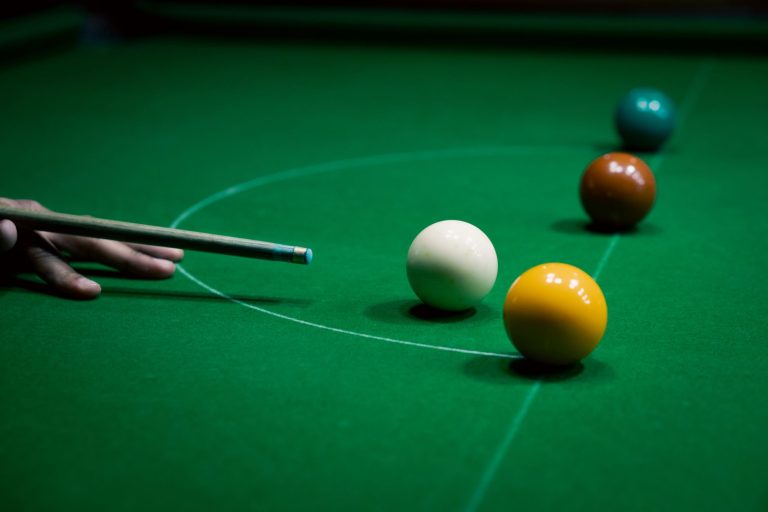
The Free Ball and Miss Rules in Snooker, Explained Simply
Ask a room of club players to explain the free ball and the miss rule and you will get a room of different answers. Both rules exist to stop a player gaining an unfair advantage from a foul, and both are simpler than they look once you see what they are for. This guide explains them in plain English, based on the official rules of the World Professional Billiards and Snooker Association (WPBSA).
First, the basics: fouls and penalties
A foul gives points to the opponent. The penalty is the value of the ball “on”, the highest value of any ball involved in the foul, or four points, whichever is highest. So the minimum penalty is four and the maximum is seven. After any foul, the next player can choose to play from where the balls lie or ask the offender to play again.
The free ball rule
When is a free ball awarded?
A free ball is awarded when, after a foul, the incoming player is snookered on the ball they must hit. For the purpose of the rule, the player is snookered if they cannot hit both extreme edges of the ball on in a straight line. The referee announces “free ball” when that is the case.
How does it work?
The player may nominate any other ball as the ball on for that one shot. The nominated ball counts as if it were the ball on, and takes its value.
- If reds are on and you pot the free ball, it scores one point, like a red, and is respotted. You then play a colour as normal.
- If a colour is on, the free ball scores the value of that colour and is respotted.
- If you pot both the free ball and the ball on, you score for both while reds are on, but only for the ball on when colours are on.
You cannot use the free ball to snooker your opponent behind it, except when only the pink and black remain. Doing so is a foul.
Example
Your opponent fouls and leaves you snookered behind the blue with a red on. The referee calls free ball. You nominate the blue and pot it into the middle pocket. You score one point, the blue is respotted and you now play a colour, exactly as if you had potted a red.
The miss rule
The miss rule stops players deliberately missing when they are snookered in order to leave the balls safe. If the striker fails to hit the ball on first, the referee judges whether they made their best possible attempt. If not, the referee calls “foul and a miss”.
What happens after a miss is called?
The opponent receives the penalty points and then chooses one of three options:
- Play from where the balls came to rest.
- Ask the offender to play again from where the balls lie.
- Have the balls replaced to their original position and make the offender play the shot again.
The three-miss rule
When the striker has a clear straight path to hit the ball on at its centre, full-ball contact, the referee warns them after a second consecutive miss. A third miss in that situation forfeits the frame. This is why you sometimes see players choose to replace the balls repeatedly: it puts pressure on an opponent who can see the ball but keeps missing it.
Why these rules matter in practice
At club level, the miss rule is often applied loosely or not at all, so agree the rules before a match. In league play, check your league’s handbook, because many leagues adapt the professional rules. For a plain-English overview of the rest of the game, see bestsnookercue’s basic rules of snooker, and our guide to how scoring works.
More free ball scenarios
Free ball on the colours
Suppose only the colours remain and the green is on. Your opponent fouls and leaves you snookered behind the brown. The referee calls free ball. You can nominate the brown, which then counts as the green for this shot. Pot it and you score three points, the green’s value; the brown is respotted and the green is still the next ball on. If you instead pot the green itself after nominating the brown, you score the green as normal.
Declining the free ball
You do not have to use the free ball. You can play the ball on directly, perhaps with a swerve or off a cushion. You can also ask your opponent to play again from where the balls lie. That option is often chosen when the position makes a free ball awkward to use.
How referees judge a miss
Referees consider the player’s ability, the difficulty of the shot and whether the attempt looked genuine. A professional escaping from a simple one-cushion snooker is held to a higher standard than a beginner, which is why misses are called so often in professional matches. The referee may also consider whether the player could have hit the ball on in a different way, for example with an easier route off a cushion.
When a miss is not called
If the score situation means the player needs snookers, a miss is normally not called, because deliberately missing would not benefit them. A miss is also not called if the player was genuinely trying and simply failed to make contact on a very difficult escape, provided the referee judges the attempt as good enough.
Tactics around the miss rule
The player receiving a miss has a real tactical choice. Replacing the balls keeps the pressure on and adds penalty points each time; accepting the position may be better if the offender’s escape left a scoring chance. Many frames at the top level are decided in exactly these exchanges.
Common misconceptions
- “A free ball scores its own value.” No. It scores the value of the ball on.
- “You get a free ball whenever you are snookered.” Only after a foul by the opponent.
- “Any miss is a foul and a miss.” The referee must judge that you did not make your best attempt. A genuine good attempt that fails is simply a foul.
Frequently asked questions
When is a free ball awarded in snooker?
A free ball is awarded when, after a foul by your opponent, you are snookered on the ball you must play. You are considered snookered if you cannot hit both extreme edges of the ball on in a straight line. The referee announces it.
How many points does a free ball score?
A free ball scores the value of the ball on, not its own value. With reds on, it scores one point and is respotted; with a colour on, it scores the value of that colour and is respotted.
What is the three-miss rule in snooker?
When a player has a clear, straight path to hit the ball on at its centre and misses it, the referee warns them after the second consecutive miss. A third miss in that situation means the frame is awarded to the opponent.