Snooker Table Sizes, Pockets and Cloth: What Players Should Know
Every snooker table looks broadly the same, but small details, the pocket cut, the speed of the cloth, the direction of the nap, change how the game plays. Understanding the table helps you judge pace, choose your shots and get the most out of practice. This guide covers the official specifications and what they mean for players.
Official full-size dimensions
| Specification | Imperial | Metric |
|---|---|---|
| Playing area | 11 ft 8.5 in x 5 ft 10 in | 3,569 mm x 1,778 mm |
| Tolerance | plus or minus 0.5 in | plus or minus 13 mm |
| Height (floor to cushion top) | 2 ft 9.5 in to 2 ft 10.5 in | 851 mm to 876 mm |
| Baulk line from bottom cushion | 29 in | 737 mm |
| Radius of the D | 11.5 in | 292 mm |
| Ball diameter | – | 52.5 mm plus or minus 0.05 mm |
The playing area is measured between the cushion faces, which is why tables are often described by their nominal size, 12 feet, rather than the exact playing dimensions.
Table markings
- The baulk line runs across the table 29 inches from the bottom cushion.
- The D is a semicircle on the baulk line, centred on the brown spot. The cue ball is played from within the D when in hand.
- The spots for the yellow, brown and green sit on the baulk line; the blue is at the centre of the table, the pink midway between the blue and the top cushion, and the black near the top cushion.
The pockets
Pocket openings are approximately 86 mm, but on competition tables the exact shape is set by templates approved by the governing body, which have been revised over the years. Snooker pockets have rounded jaws rather than the angled cuts of many pool tables, so a ball that hits the jaw at speed will often stay out. Tables are sometimes described as having “tight” or “generous” pockets. Tight pockets reward accurate, slower potting; generous pockets let you hit the ball harder. Practising on tighter pockets than you play on in matches is a common way to sharpen accuracy.
The cloth and its nap
Snooker cloth is a woven wool, traditionally green, with a directional nap: the fibres lie in one direction, running from the baulk end towards the top of the table. The nap affects how the ball behaves:
- A slowly rolling ball played against the nap tends to drift more than the same shot with the nap.
- Side spin and screw behave slightly differently depending on direction.
- Cloth that has been ironed and brushed properly plays faster and truer.
Strachan 6811 is one of the best known tournament snooker cloths and is widely used in amateur championships. Club tables often use a heavier, more durable cloth that plays slower. Professional tables are also heated, which keeps the cloth dry and the balls running consistently.
Smaller tables for home
Full-size tables need a room of roughly 22 by 16 feet to play every shot comfortably with a standard cue, which is more than most homes have. Many players buy a 6, 7 or 8 foot table instead. They are excellent for practising cue action and potting, but the shorter distances change pace and positional play, so keep some practice on full-size tables if you play matches. Bestsnookercue has a practical guide on making a home table play like a club table and a range of tables and balls.
Looking after a table
- Brush the cloth from baulk to top, following the nap, after each session.
- Iron the cloth regularly, again with the nap, to keep it fast and flat.
- Clean the balls; dirty balls skid and throw unpredictably.
- Keep the room at a steady temperature and humidity, because damp cloth plays slow and heavy.
Table construction
A full-size snooker table is built on a heavy frame supporting a bed of slate, usually in several sections, carefully levelled and joined so the playing surface is perfectly flat. The slate is then covered with the cloth, and the cushions, made from rubber faced with cloth, are fixed around the edges. Good installation matters as much as good materials: a table that is slightly out of level will make slow-rolling balls drift, which is frustrating for practice and unfair in matches.
Cushions
The cushions govern how the ball rebounds and how pockets accept balls played along the rail. Worn or poorly fitted cushions can give dead or unpredictable bounces. If a table plays strangely off the cushions, it is usually a sign that it needs attention from a table fitter.
Balls
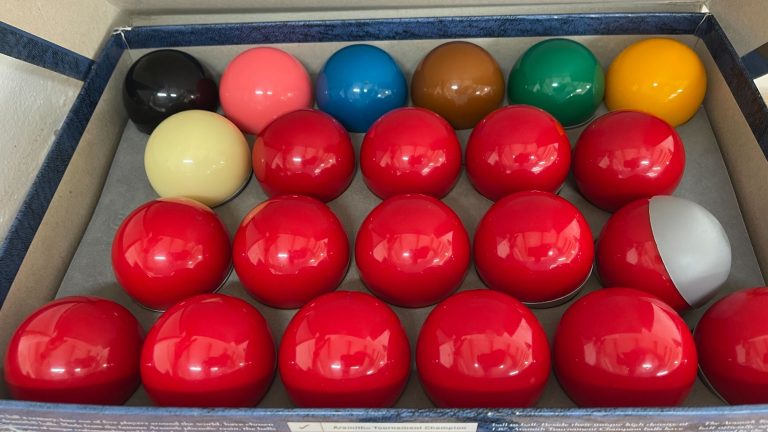
Snooker balls are 52.5 mm in diameter with a very tight tolerance, and good sets are matched so all the balls behave the same. Cheaper sets can vary slightly in weight and roundness, which makes cue ball control inconsistent. Many clubs replace their match balls periodically, and players often prefer to practise with a cue ball that has a visible spot, so they can see the spin they are applying.
Lighting
Even lighting over the whole playing area is essential. Most tables use a canopy or a bank of lights hung above the table to avoid shadows. Poor lighting makes it harder to judge thin contacts and to see the base of the object ball.
Why it matters for your game
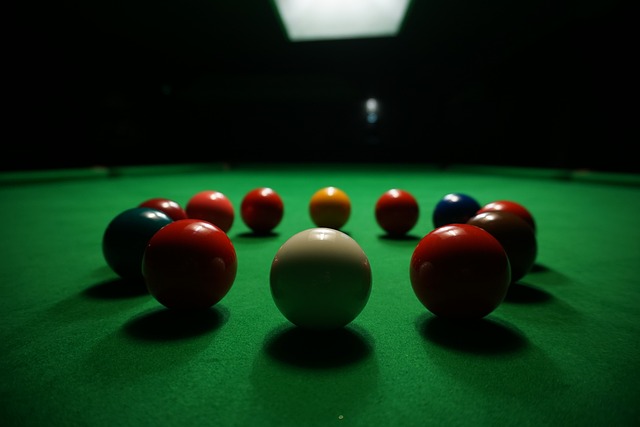
If you practise on one table and play matches on another, expect to adjust your pace in the first few frames. Many players roll a few balls up and down the table before a match specifically to judge the speed. For the rules that depend on these markings, such as playing from the D, see our guide to how snooker scoring works, and for the differences from pool tables, our comparison of snooker and pool.
Frequently asked questions
What size is a full-size snooker table?
A full-size snooker table has a playing area of 11 ft 8.5 in by 5 ft 10 in (3,569 mm by 1,778 mm), with a tolerance of half an inch. It is usually called a 12-foot table, which is its nominal size including the cushions.
How big a room do I need for a full-size snooker table?
Around 22 by 16 feet allows you to play every shot comfortably with a standard 57 to 58 inch cue. In smaller rooms you will need a shorter cue for some shots, or a smaller table such as a 7 or 8 foot model.
What does the nap on a snooker table do?
The nap is the direction in which the cloth fibres lie, running from baulk towards the top cushion. It affects how slow-rolling balls drift and how spin behaves, so shots played against the nap can behave slightly differently from the same shot played with it.